

Article: Marina Méndez on the Art of Noticing

Marina Méndez on the Art of Noticing
What makes an ordinary object worthy of becoming a painting? For Marina Méndez, it begins with slowing down, paying attention and noticing the beauty hidden within everyday life.
I first discovered Marina’s work a year ago and immediately recognised something special in her quiet, considered approach.
In this Q&A, she shares how memory and instinct shape her subjects, the process behind her compositions and how her Spanish roots may inspire what comes next.
Your work celebrates the beauty found in ordinary objects—from a simple bottle of milk to flowers gathered in a vase. What first drew you to these everyday subjects?
I think it's exactly because they're ordinary things. Our lives are becoming increasingly fast-paced, and we're surrounded by constant stimulation that encourages us to live on autopilot. For me, observing and painting everyday objects or moments, such as a vase filled with flowers you've bought that morning at the market, is a way of slowing down and appreciating those small things that move me or bring beauty to my daily life.

How do you decide that a particular object or arrangement deserves to become a painting? Is it instinctive, or are you looking for something specific?
It's usually quite instinctive. For me, the real decision happens beforehand. Choosing to be present, to stay curious and to observe carefully puts me in the right frame of mind to want to capture or preserve fleeting moments and objects.
Sometimes the idea of painting something happens in the moment, I'll see a beautiful bunch of flowers and simply want to paint them. Other times, it's connected to a memory, such as playing cards with my family or enjoying a plate of grilled sardines in the summer by my beloved Mediterranean.

Your paintings have a wonderfully quiet, intimate quality. What atmosphere or feeling do you hope to capture through your work?
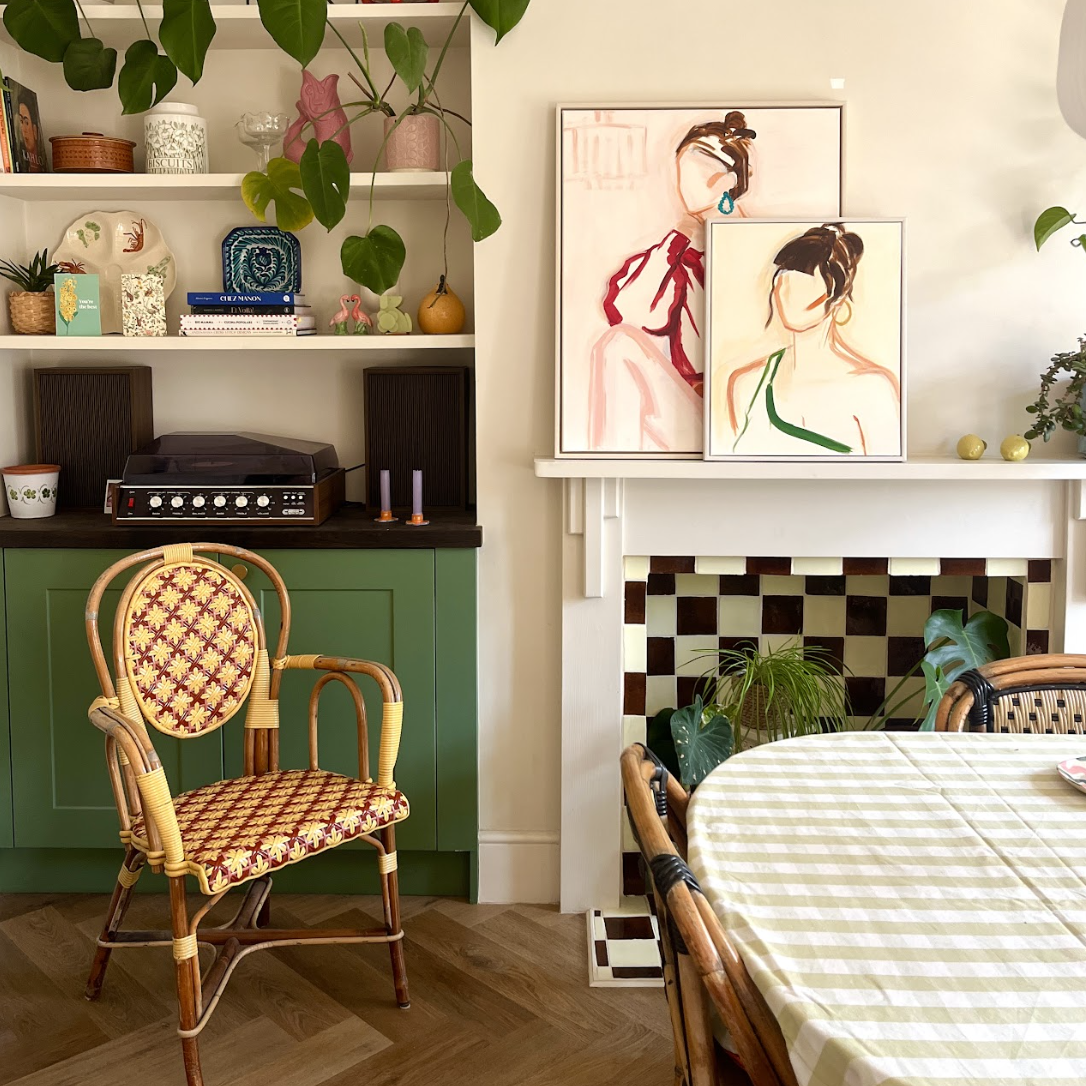
I hope that when people look at one of my paintings, they're reminded that simple things can still move us. Recently, a collector told me that the flower featured in one of my paintings held a special meaning because of the love that she and her mother shared for that particular flower. I love it when people see their own emotions or memories reflected in my work.

How do light, colour and composition help you transform something familiar into something quietly compelling?
As I mentioned before, choosing what to paint is largely intuitive. Once I know what I want to paint, I spend more time working on the composition. Sometimes I create physical arrangements or still lifes, while at other times I work digitally. I enjoy using programmes such as Photoshop or Procreate to edit or simplify images. For example, I might remove an object from an original photograph so that the composition and visual balance feel stronger.
Another important aspect for me is colour interaction, particularly in my recent floral paintings. Although the backgrounds are usually dominated by one or two colours, I spend time carefully selecting those colours, making studies and testing how they'll work alongside the main subject. Once I've settled on the background colour, I build up the light, shadows and brushstrokes to give it more depth and drama.

Can you talk us through your creative process, from first noticing a subject to knowing when the finished painting is complete?
Once I’ve decided what I’m going to paint, which is usually a fairly instinctive process, I begin working on the composition, the colour palette, the materials, the size of the canvas, and so on.

cont.....
nce I start painting, sometimes it all comes together, and sometimes it doesn’t quite work. So a big part of the process is being flexible and making adjustments as I go, until I arrive at something that feels right.
As for knowing when a painting is finished, that’s the eternal question, isn’t it? You could always keep refining a painting or adding more detail. What often works for me is to stop when I’m happy with what I see. Then, if I come back to it a few days later and it still feels complete, if there’s nothing that I feel I absolutely have to change, I consider it finished.

What are you currently noticing or exploring in your work—and what might we expect to see from you next?
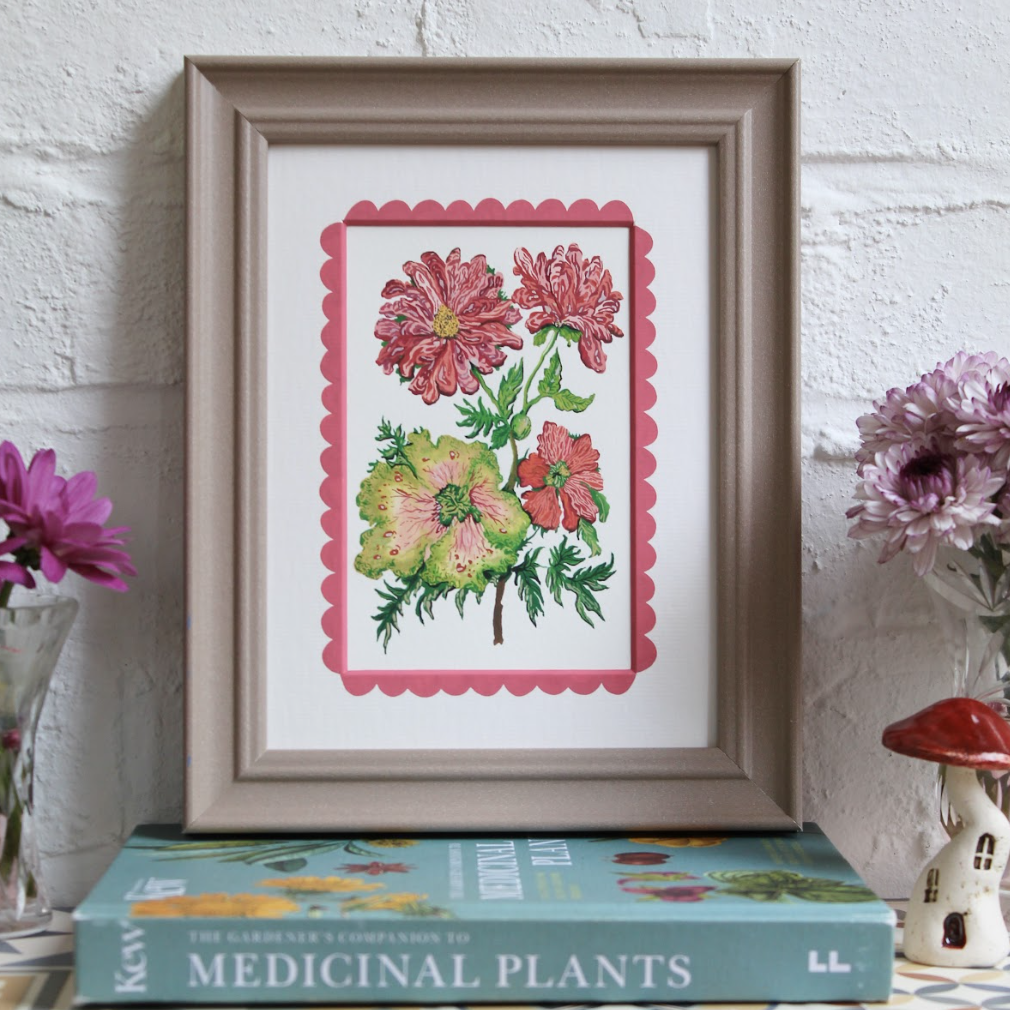
This year, I’ve been very focused on flowers. Initially, I was trying to capture their inherent fleetingness through looser, more spontaneous brushstrokes. But gradually, this has led me to look more closely at each individual bloom and to want to paint their qualities in greater detail: their colours, textures, and the delicate veins running through their petals and leaves.
Looking ahead, I’d love to work on a series of paintings that reconnect me with my roots. I’ve now spent several years away from Spain, and although I’m incredibly happy living in the UK, I feel a growing desire to return, through painting, to my homeland and the endless beauty of its customs and traditions.
For now, though, it’s time to slow down and enjoy a wonderful new chapter, as in just a few days we’ll be welcoming our daughter into the world.

Thank you, Marina, for sharing such a thoughtful insight into your work and the quiet moments that inspire it.
As you prepare to welcome your daughter into the world, an entirely new chapter is beginning—one filled with fresh emotions, discoveries and ways of seeing.
We cannot wait to watch how motherhood might shape your observations and find its way, in time, into your evolving practice.
For now, we wish you and your growing family every happiness as you begin this beautiful new adventure.
xx